
How does mapping innovation ecosystems help startups and cities boost their competitiveness?
Your starting point in urban innovation

We map the innovation ecosystem of a city to shed light on its possibilities and bring them to life. The map serves as the initial guide for navigating and integrating into the complex innovation ecosystem of the city. It helps startups stay relevant while bringing precision to decisions of urban authorities. Before responding to how, I discuss what constitutes an innovation ecosystem map that enables urban competitiveness.
My innovation ecosystem mapping procedure
To produce an ecosystem map, I start with urban infrastructure as the basemap. Then add layers of anchor institutions (Universities, research centers, local government bodies, etc.), social and physical assets (e.g, parks, culture and community centers, transportation hubs) on top of their respective geographic locations. By locating existing players and institutions, I can reveal weak relationships or potential agreements. Then I see if there is a common urban issue or spatial distribution that brings them together and builds a common vision for the future of the city, through innovation and ecosystem creation.
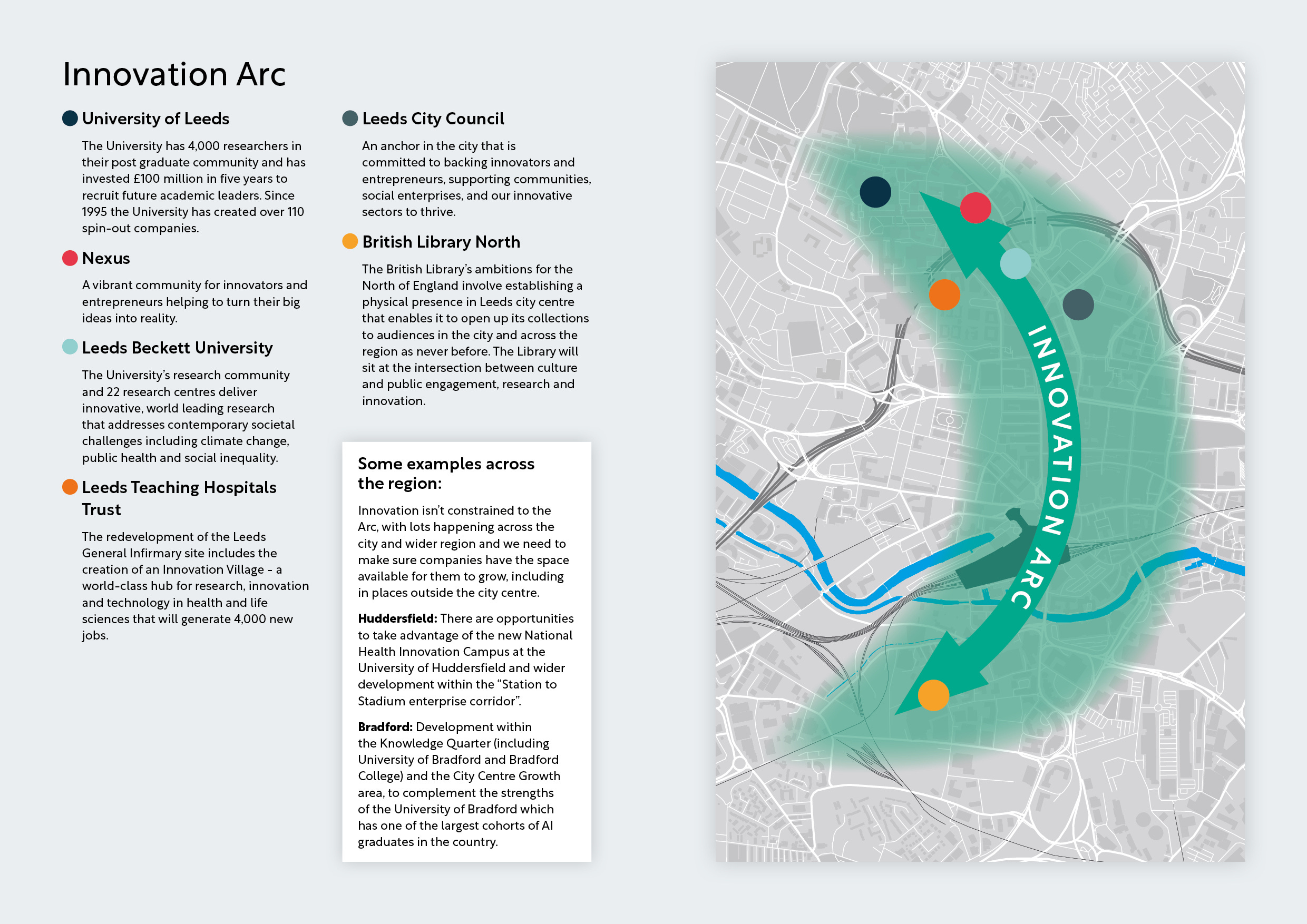
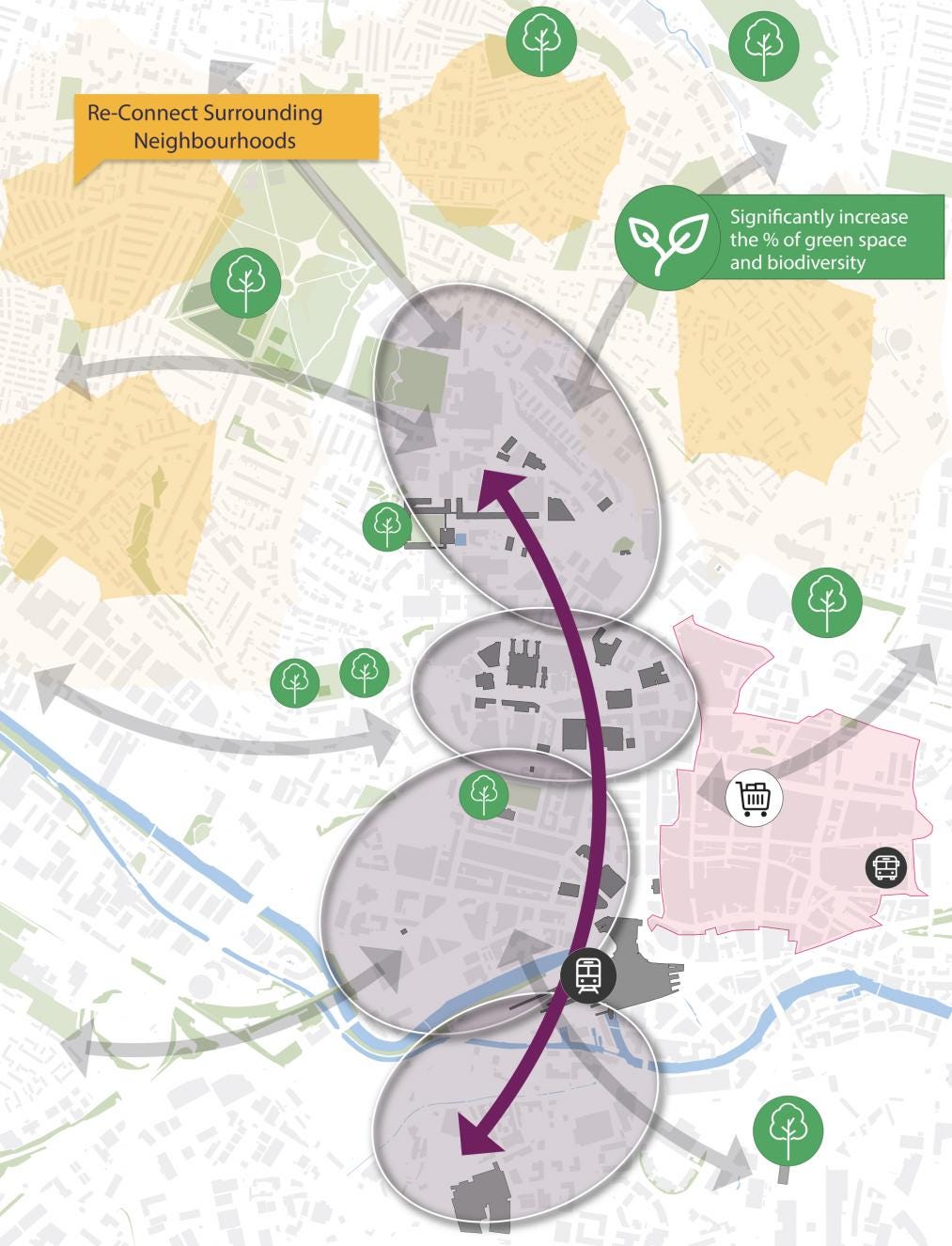
However, there is more to an innovation ecosystem map than just a simple location identifier. It lists available spaces of research, experimentation and collaboration. It creates a database of ongoing and upcoming projects, exhibitions, communities of practice and pools of funding. This helps us move beyond infrastructure and identify policy levers and incentives. Leeds innovation Arc is a great example of this approach, in which clusters and knowledge institutions are not only mapped, but the effect of their relationship is felt throughout the city and in connection with Leeds long-term vision.
Benefits of innovation ecosystem map for practitioners, startups and cities
Urban practitioners make use of ecosystem maps to identify and invest on competitive advantage of their specific region of interest. Startup founders would analyze it to investigate the human capital of a place in addition to its financial capital and prepare themselves for opportunities in knowledge sectors, skills and new spin-out capacities.
Cities are looking to build a compelling narrative based on their core value in order to attract you. This strategy is often regarded as “place branding” or “creative city”. But more often than not, cities don’t know what they are good at, what their value proposition is. This confusion keeps urban innovation behind closed doors. Ecosystem mapping is a way to reveal the hidden backdoor to urban innovation and get involved in its activities.
Let me elaborate by narrating the benefits of mapping the innovation ecosystem of cities in a 4-phase process:
From ideation to research and development
In a dynamic system such as a city, ideas do not just “fit” with their urban context. They evolve with it. Therefore, cities do not only test one idea; they discover and explore multiple pathways. Enabling cities to define and direct technological advancements requires flexibility and mechanisms to reduce risk. Gaining geospatial insight from innovation ecosystem shifts urban authorities from decision fatigue to taking action by highlighting desirable scenarios. It distributes the resources to where it needed the most and tailors the investments to specific contexts.
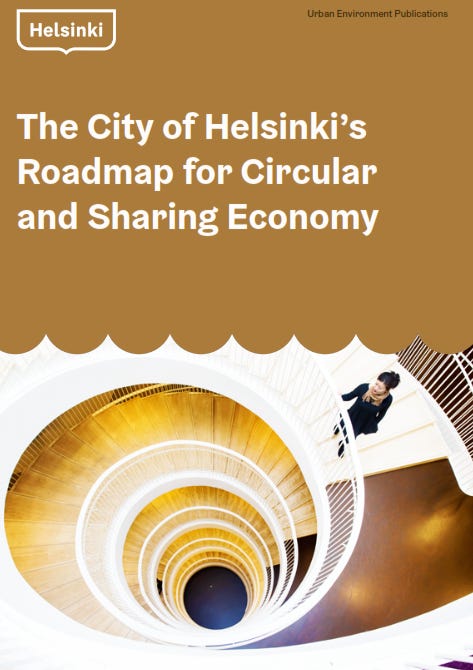
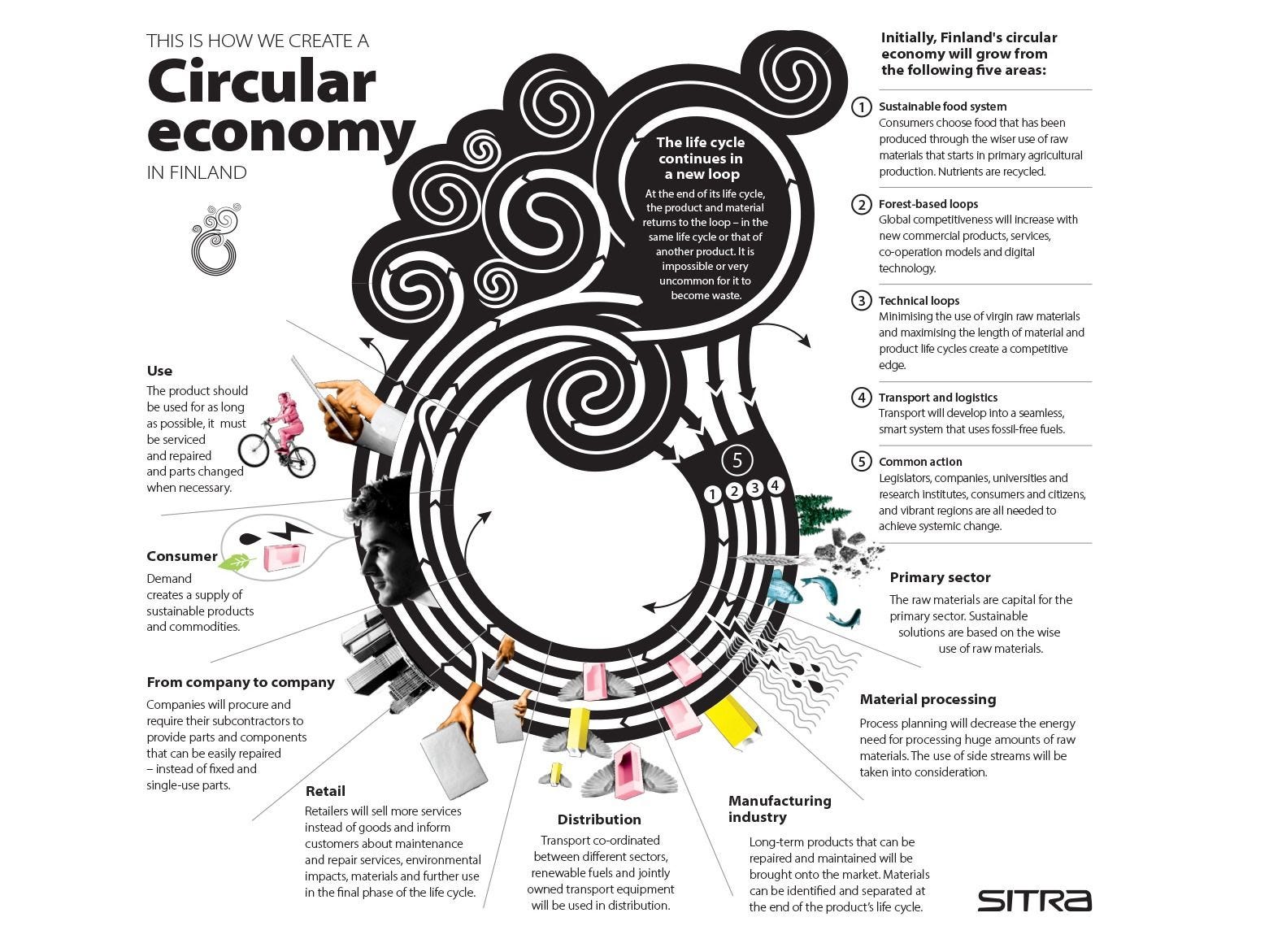
Cities and startups can work on various scenarios based on future trajectories of urban innovation ecosystems. Helsinki’s innovation ecosystem can be mentioned here, where each research and development can be traced back to the city’s (and to a larger extent, Finland’s) Circular Economy roadmap.
From specialization to competitive advantage
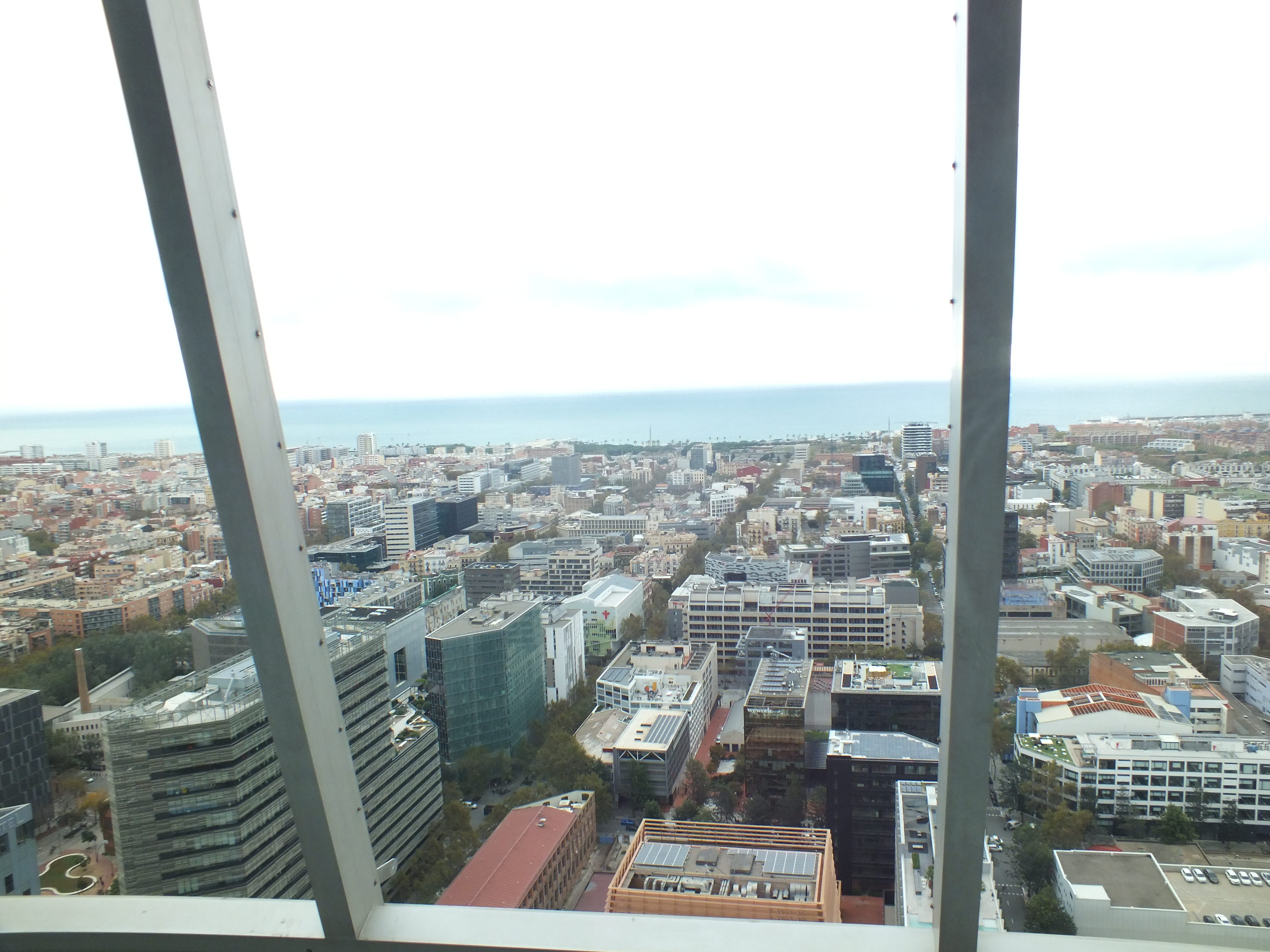
We map cities’ innovation ecosystems to identify their most important challenges and capture their greatest opportunities. Ecosystem maps are produced to leverage unique competitive advantages, allowing cities to pivot quickly into niches where they are globally relevant. Additionally, consulting and comparing ecosystem maps supports practitioners and startups to diversify, aligning products or services with the technologies and sectors in which the city has already built a strong supply chain or has showcased an interest in developing further. Barcelona is a successful example where the correct identification and creation of a brand led to the common development of Smart City.
From networking to clustering
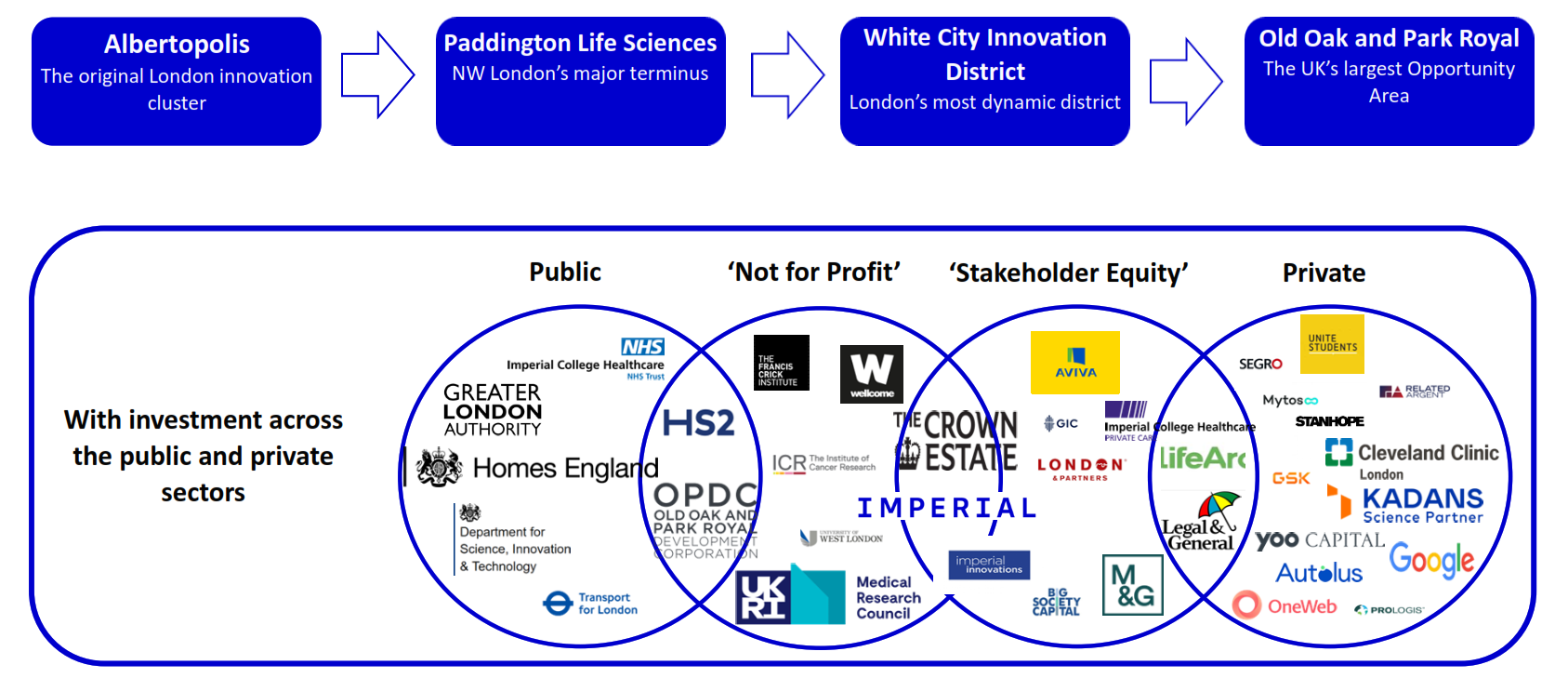
Mapping the ecosystem (startups, universities, communities, organizations, etc) visualizes the complex networks of actors and collaborators and helps cities coordinate them more effectively. It will foster partnerships never actualized before. To build effective clusters that can compete in this age of urban-oriented globalization and 4th industrial revolution, cities need more than physical proximity of industries. Innovation ecosystems depend on multi-stakeholder governance—public–private partnerships. But these partnerships will not be realized if the initial encounters are not made.
I argue that clustering starts from regular cafes, networking events, workshops and even common urban spaces; and then it is scaled to innovation districts. The right conditions and social forces should meet long before the physical establishments are in place to build a welcoming space for inspiration and entrepreneurship.
From design to problem-solving
This is where having place-based insights empowers actors the most. In this stage, we locate the high-priority hotspots by identifying problems through stakeholder engagement/community participation or spatial analysis. These insights are then evolved into business propositions by filtering high-feasibility opportunities. In short, we utilize design to address local needs. Mapping identifies these pain points as market gaps and adds a layer of critical understanding in which problems are no longer seen as “system failures” but design briefs. Here, cities and their innovation ecosystem act as an enabler of change, providing the agency and framework for urban transformation.
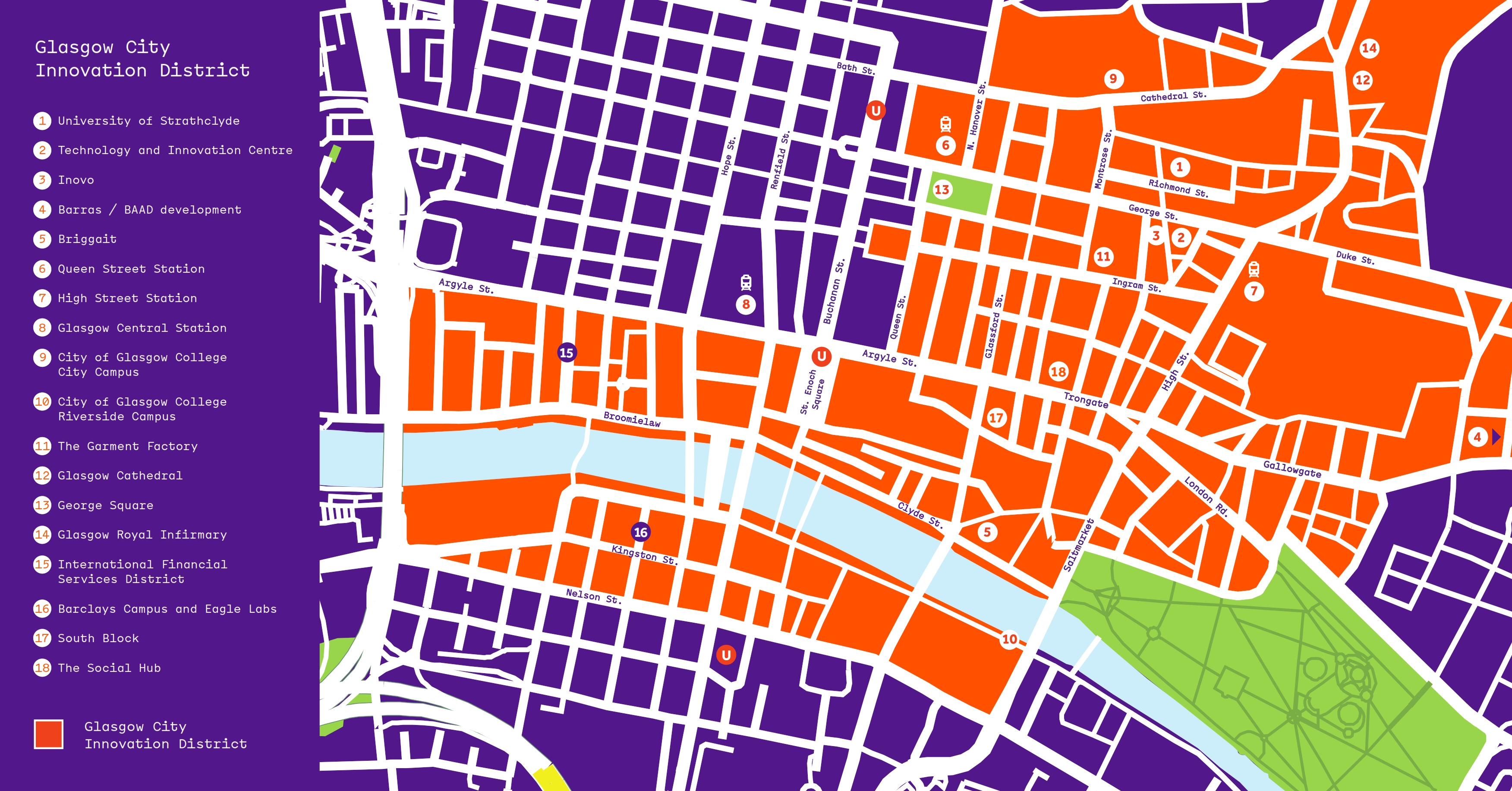
Glasgow’s innovation district, for instance, is built on the idea that students as future entrepreneurs can turn their university campus into a space for problem-solving and business development.
In conclusion, we can use urban innovation and ecosystem maps as instruments to determine where we should start from, create small wins, build new R&D opportunities and scaleups, and turn place‑specific advantages into market outcomes. In practice, urban innovation ecosystem mapping provides a framework to prioritize niches, de-risk urban projects, and accelerate growth.
References
Bontje, M., & Musterd, S. (2009). Creative industries, creative class and competitiveness: Expert opinions critically appraised. Geoforum, 40(5), 843–852. https://doi.org/10.1016/j.geoforum.2009.07.001
Centrinno. (2021). Urban Ecosystem Mapping Guidebook.
City of Helsinki. (2020). The City of Helsinki’s Roadmap for Circular and Sharing Economy.
Hospers, G.-J. (2003). Creative cities in Europe: Urban competitiveness in the knowledge economy. Intereconomics, 38(5), 260–269. https://doi.org/10.1007/BF03031728
Huggins, R., & Clifton, N. (2011). Competitiveness, Creativity, and Place-Based Development. Environment and Planning A: Economy and Space, 43(6), 1341–1362. https://doi.org/10.1068/a43559
Inclusive Growth Leeds available at: https://www.inclusivegrowthleeds.com/
Sitra available at: https://arkisto.sitra.fi/en/
Strathclyde University. (n.d.). Glasgow City Innovation District [Map]. Retrieved https://www.glasgowcityinnovationdistrict.com/engagewithgcid/districtmap/
Urmetzer, F., Gill, A., & Reed, N. (2018). Using business ecosystem mapping to generate new competitive value propositions, University of Cambridge.
World Economic Forum. (2018). Agile Cities: Preparing for the Fourth Industrial Revolution.
World Economic Forum. (2025). Innovation Ecosystems: A Toolkit of Principles and Best Practice.